
Damascene Farwa is still a good option for keeping yourself warm in winter
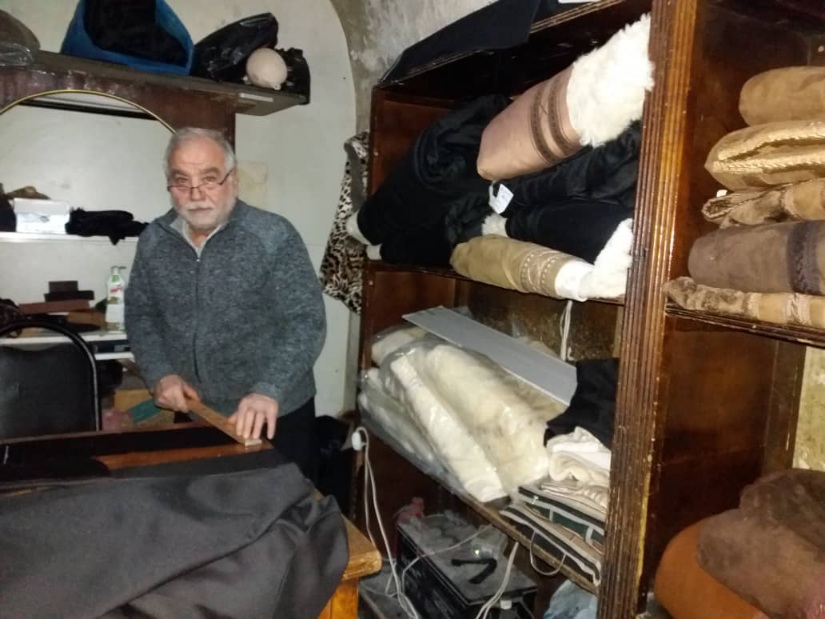
In cold weather, you can order a Farwa to keep you warm as you sit in a restaurant or a cafe in the old city of Damascus or in other areas in several governorates.
This tradition is popular and has been recommended by the people who spend long time or stay until a late hour in restaurants or cafes.
Abo Al-Nour, a 52 year-old- man, who was sitting with his family and wearing a brown Farwa in one of the restaurants at night in the Bab Touma district told Syria Times: “ I usually order a Farwa when I come to the restaurant in cold weather.. I do not like to wear a coat when I come here .. I like to wear a Farwa because its comfortable and reminds me of our heritage.”
Another lady, 24 years old, was also wearing a grey Farwa on her shoulders. She told us: “ I like this tradition and it keeps me warm.. I spend long time with my friends here, so we order it.”
Historically speaking, the industry of the Damascene Farwa ( Bedouin coat) dates back to more than 1000 year and it was made with real fur, but nowadays this industry has witnessed a decline in the number of workshops and production due to the circumstances that the country is going through and due to the spread of the synthetic fur Farwa, which is cheaper than real one.
The production of real fur farwa requires great effort, according to Abo Mohammad, a 50-year-old man, who learned the profession from his father, who also inherited it from his father and grandfather.
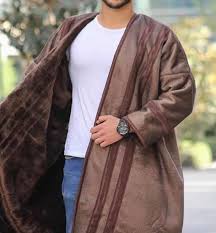
Abo Mohammad told Syria Times- during an interview at his small workshop in Souk Al-Faro (Farwas Market) district in Damascus- that the most important stage in this industry is salting the sheep skin and then drying it under the sun and washing it well with soap and water after it absorbs the salt well. After that the process of re-salting the skin, adding alum and softening it with simple hand tools and putting it under the sun again until it is ready to be cut and knitted according to the required sizes.
“The production of hand-made real fur farwa has declined over the past years due to the sharp decrease in demand and the high costs of making it… Customers prefer synthetic fur farwa because it is cheaper than the real one. The price of synthetic one is less than 100.000 Syrian Pound, while the real one can set you back more than 400.000 Syrian pounds due to its soft touch and light weight. Today, we import the fur from China and we sew it here. But at the same time we continue to produce the real fur farwa because it is exported to Gulf States, Iraq and Lebanon.. We were weekly exporting 1000 real fur Farwas plus 2000 fur vests to other countries; however now we yearly export less than 200 pieces,” he clarified.
Abo Mohammad indicated that some Syrians set up workshops for producing Farwa in other countries , but their products were not demanded because the farwas that are being made in Syria have a special touch.
“The current problem that faces this industry is the shortage of labor, not raw materials, because most of workers in this field moved to other industries after the decrease of demand for hand-made Farwas. Moreover, the number of workshops has been reduced from 40 to 8 over the past years. There are still several workshops for producing Farwas in Homs, Aleppo, Raqqa and Hama,” he added.
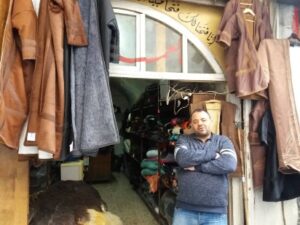
Abo Omar Al-Jajeh, who has another workshop in the same district since more than 100 years, told Syria times that the styles of Farwa have been modernized to meet the requirements of customers.
“The quality and the type of fabric and fur has changed with the passing of time. We use Indian-made fabric for producing Farwas. But the Farwa is still a folklore coat for keeping the body warm in cold weather,” he said.
Abo Omar went on to say: “Nowadays, Farwa is being used by both men and women at home during the winter season and it is being bought by foreigners as a gift for those who feel the cold more than others in western countries, including America. Few days ago, a Russian man came to my shop here to buy a real fur Farwa because he want to put it in to keep himself warm when he returns to his homeland,”
The “ Farwa”, whose name is taken from the natural leather covered with wool, which is the main material that is being used in producing it, is still the best option in winter due to the shortage of fuel and the increment of the hours of daily power cuts.
Interviewed by: Basma Qaddour