
The price of 1kg of Makdous in Syria ranges from SYP 15,000 to SYP 23,000
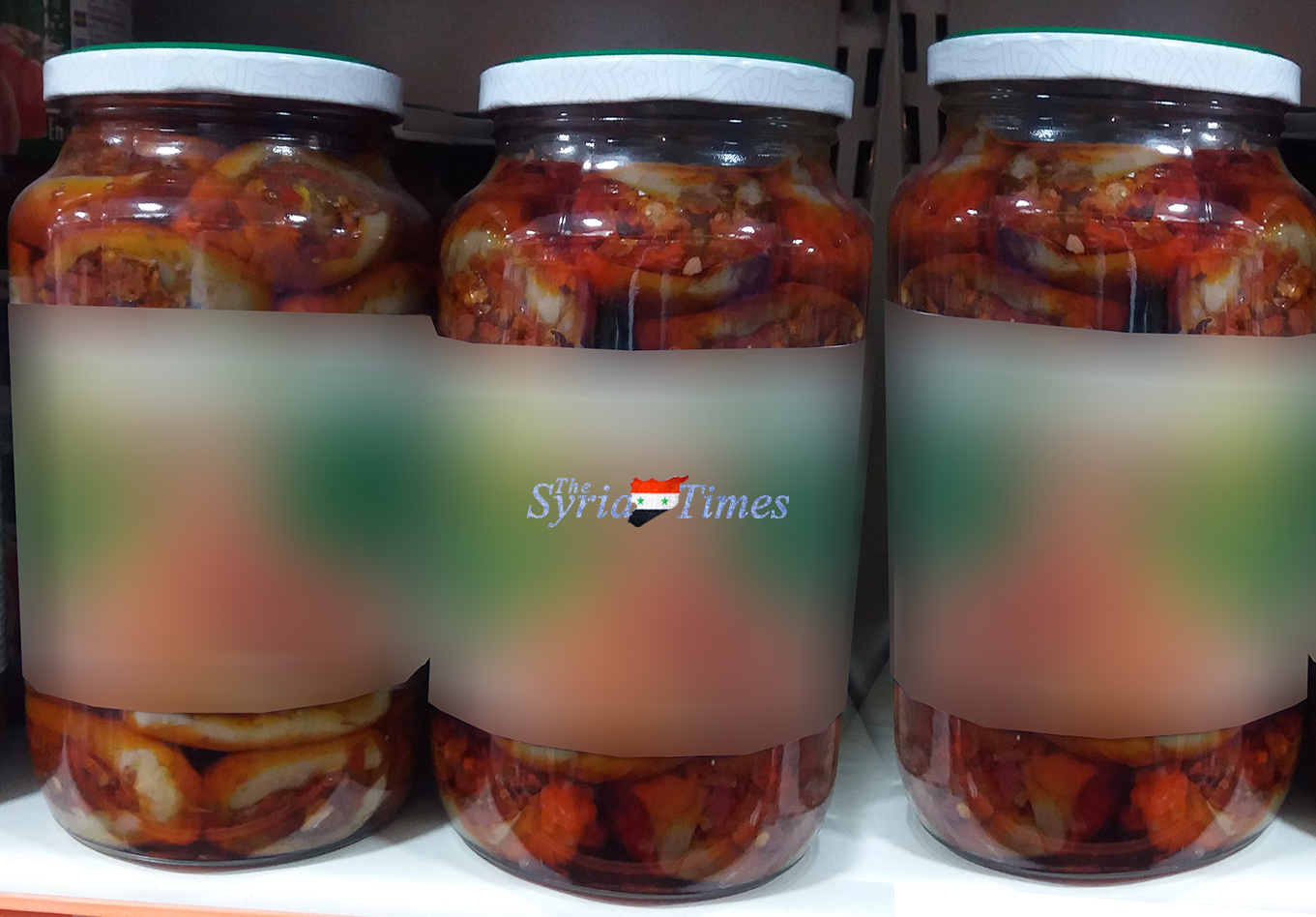
Syrian people inside the homeland and abroad, especially the old and young generations, are unwilling to accept the idea of abandoning Makdous dish for breakfasts and/or dinner, despite the high cost of making it.
“I paid 125,000 Syrian Pounds ($25) to make 20 kilograms of Makdous and I used mixed oil (olive oil plus refined sunflower oil) ,” 27-year-old , Rahaf Al-Bardan, told Syria Times, adding that her mother, aged 55,who used to eat Makdous near an oil-fueled stove at home in winter before the start of the war in Syria (in 2011) can never stop making this dish.
“My family was making 100 kilograms of Makdous every year, and we gave some to our relatives and neighbors, who do not know how to make it; however over the past years, ithas been difficult to continue with this habit due to the hike of the prices of the Ingredients of this dish and shortage of gas and electricity of which one is needed to boil eggplants… To be honest, we consider this dish as one of our traditions, and we continue to make it without being hungry for it,” she clarified.
This year, the cost of making Makdous was about 5 times more than it was 4 years ago because of the sharp decline of the Syrian pound’s value, which reached 4800 SYP against the US dollar in the black market ($3,015, official exchange rate), compared to 635 SYP to the US dollar ($435, official exchange rate) at the end of September 2019.
In local markets, the prices of Ingredients -according to quality- are as follow:
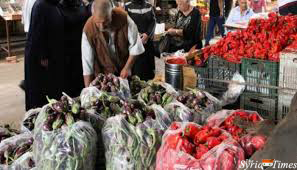
- One kilo of eggplant is SYP 750-1,000.
- One kilo of walnut is SYP 40,000- 60,000.
- One kilo of pepper is SYP 1,850-2,000.
- One kilo of garlic is SYP 1,750-2,500.
- One kilo of olive oil is SYP 17,000- 20,000.
Therefore, the cost of making one piece of Makdous reaches SYP 700- 1500 ( made either by households or factories).
Some women, who are making Makdous in Bab Srejeh Market (popular market) in accordance with customers’ requirements, told Syria Times that “Makdous Season” is a source of income for them because a lot of families have no time to make it or they do not know how to make it.
One of those women, whose name is Um Ibrahim, is a breadwinner and she awaits for this season to get money. She has 4 schoolchildren.
“I started making Makdous for customers in 2007, and I received orders from many families; however, this year, the quantity of orders has gone down because most of my customers have traveled abroad and the prices have increased,” she said.
Another woman said that she supervises the process of boiling a big quantity of eggplants for a shop in the market, so that some families can buy them immediately to fill them at their houses.
The sale of boiling eggplant in markets is a good idea as it makes life easier for homemakers.
The other idea, which has been created by women, is using pistachio instead of walnut to stuff eggplant with the aim of reducing the cost of making Makdous as the price of one kilo of pistachio is about SYP 25,000.
In Syria, the price of 1kg of Makdous ranges from SYP 7,000 (Made by households for their families’ members and stuffed with acceptable walnuts) to SYP 23,000 (at shops and malls and they are made by factories or households for shops), which is considered high by many people..
More Syrians are struggling to put food on their tables today more than ever before as the crisis in the country enters its 12th year.
WFP estimates that 12 million Syrians are now grappling with food insecurity. That is more than half the population and 51 percent more than in 2019 and it is due to harsh sanctions placed on the Syrian people.
Record highs of food prices, a fuel crisis, ongoing inflation, continuing conflict in some parts of the country, adverse weather and the war in Ukraine in early 2022 have taken a devastating toll on Syria’s most vulnerable.
Yet, a lot of families are all for making even a very small quantity of Makdous at their houses.
This part of tradition has been brought by Syrian people, who travelled abroad, to Canada and maybe to other countries in Europe.
The Charms of Makdous
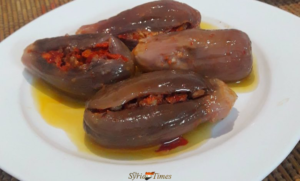 Houda Al-Bounni, Syrian expatriates living in Canada, told Syria Times: “ In Montréal city, there were only Lebanese canned Makdous. But when Syrian refugees came to Canada, there were farmers among them and they brought with them the seeds of small eggplants because it was unavailable here. They planted them and promoted the small eggplants in the markets. So, Syrian citizens, who are living here, can make Makdous at their houses.”
She added that there are now Syrian packaged Makdous of several brands in the Arab Food centers.
Mrs. Al-Bounni in addition clarified that some of the Syrian households, who came to Canada and did not know what they had to do to make a living , made Makdous at their homes and sold it to get money.
“As a busy woman, I prefer to buy packaged Makdous, which is really delicious…. The price of a jar of Makdous is 18- 33 Canadian dollars according to its size…This price is high in Canada, but I like this dish.”
The roots of Makdous stem from Syria although it is a beloved staple diet that spreads throughout Levantine and Middle Eastern cuisine. It consists of oil-cured baby eggplants and is traditionally stuffed with a flavorful mix of crushed red peppers, walnuts, garlic, and salt.
According to experts in nutrition science, every component of Makdous offers various nutritional benefits. The eggplant itself is an excellent source of potassium and fibers. The stuffing of the eggplants comprises a tasty combination of healthy ingredients. Walnuts are a nutrient-dense food rich in plant-based omega-3 fatty acids making it an essential heart-healthy food. Additionally, red peppers are an excellent source of vitamins A, E, B6 and most importantly are one of the richest dietary sources of essential vitamin C. They also contain many healthy antioxidants that are good for eye health. Moreover, the essential and flavorful ingredient, garlic, is a very good source of manganese and vitamin C, besides several minerals including phosphorus, calcium, potassium, iron and copper. Garlic compounds can reduce blood pressure and improve cholesterol levels, hence lowering the risk of heart disease. Overall, this combination preserved in olive oil constitutes a healthy appetizer when consumed moderately.
Here below is the recipe for making Makdous:
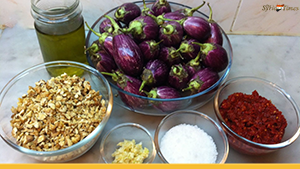 Ingredients:
10 kg of baby eggplants
1 kg walnuts
1 garlic bulb
1 kg ground coarse salt
3 kg sweet red pepper (capsicum)
Preparation:
1. Wash the eggplants and put them in a bag, then put them in a saucepan that contains boiling water. Let the water boil for about five minutes, and then wash them under cold water and cool the eggplants in order to prevent them from blackening.
2. Remove the stems and slit each eggplant with a knife in the middle, then put some of the coarse salt inside the slit and put the eggplant back into a bag and put a weight on it so that it is compressed and drained of water. The compression should last between 24 to 48 hours.
3. To prepare the filling, chop some walnuts, garlic and capsicum. Add coarse and crushed salt (salt according to your preference).
4. Once the eggplant is drained, stuff it with mixed ingredients and then place the eggplants in clean, pre-sterilized jars.
5. Add oil to fully immerse the eggplants and leave them for 48 hours, if the oil level drops below the eggplant add more oil so that the eggplants remain submerged. Leave them for about two weeks before eating, the longer you marinate them, the more sour they will be.
Reported by : Basma Qaddour