
The youth dialogue sessions (Think for Syria) in public universities concluded
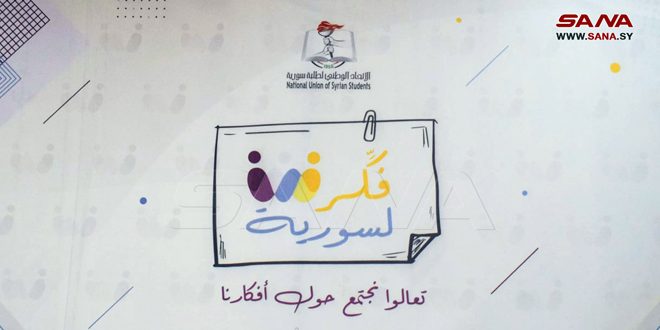
Provinces (ST): The youth dialogue sessions launched by the National Union of Syrian Students in public universities concluded yesterday under the title “Think for Syria” with the participation of more than 500 male and female students from the undergraduate and postgraduate levels.
Over the course of two days, the participants discussed several axes that focused on the importance of dialogue and its impact on the path of diversity, the promotion of citizenship and youth participation, the role of youth in local development, non-traditional income generation opportunities, activating the cultural role of change, building up the individual and society, and deepening the vision of young people to develop the higher education system.
Qassem Al-Ali, a member of the leadership of the Damascus University branch of the National Union of Syrian Students, confirmed in a statement during the session held at the Rida Saeed Conference Center at the University of Damascus that the sessions included open discussions about possible opportunities for young people to achieve good economic returns in these circumstances.
In Aleppo, the discussions of the second day focused on how to develop the higher education system and how to activate the role of youth in building society culturally and socially, according to Laith Arjoun, the facilitator of the dialogue session.
In Lattakia, the dialogue sessions included discussing many life issues related to their economic needs and proposing appropriate solutions to their problems.
In Tartous, discussions on the second and last day of the dialogue sessions focused on the vision of young people to develop higher education and activate the cultural role as a means of change and building the individual and society.
In Hama, the discussion centered on dialogue and its impact on the path of diversity, the promotion of citizenship, youth participation, the role and contribution of youth to local development and non-traditional income generation opportunities.
The interventions also focused on activating the cultural role as a means of change, building the individual, society and universities, acceptance and digital transformation, and supporting the local development process.
K.Q.