
Musical evening in Damascus sheds light on Syriac and Assyrian heritage
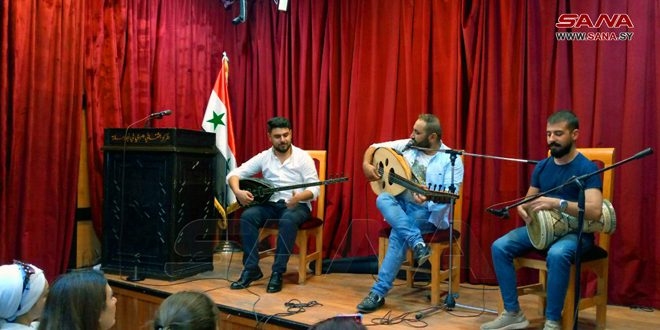
The Directorate of Intangible Heritage at the Ministry of Culture organized a musical evening that presented samples of Syriac and Assyrian singing, which is considered as one of the components of the Syrian intangible heritage.
The event, which was held on Sunday at the Abu Rummaneh Cultural Center in Damascus, comes within the framework of the ministry’s “Nawafez5” project, which aims at documenting and promoting the Syriac and Assyrian heritage, which is kind of oral expression through the word of mouth, in order to preserve Syria’s intangible heritage.
The musical evening included several Syriac and Assyrian songs presented by the singer Hovik Karbo, such as the old folkloric Syriac song “Karshala Eidy” by the late artist Wadih Al-Safi, in addition to a number of Assyrian folkloric songs. Buzuki player Alan Murad and Darbuka player Rami Ibrahim took part in the event alongside the singer.
The Assyrian music was performed especially at temples and for top warriors. It enjoyed a high position in the royal courts, as proved by archaeological finds such as the inscriptions, paintings and the remains of musical instruments which are kept in different museums around the world, according to Idris Murad, supervisor of “Nawafez5” project.
On the other hand, Murad added, the Syriac music started with the Epic of Gilgamesh and it was associated with religious music. He pointed out that the Syriac music is characterized by being popular as it is the music of the peoples in northern Syria, Iraq and Anatolia, clarifying that some Levantine melodies go back to the Syriac music.
On his part, Singer Hovik Karbo stressed the need to focus and shed light on all the components of the Syrian heritage in order to protect it and spread it as widely as possible.
Hamda Mustafa