
Discussion session about political repercussions of economic sanctions on Syria
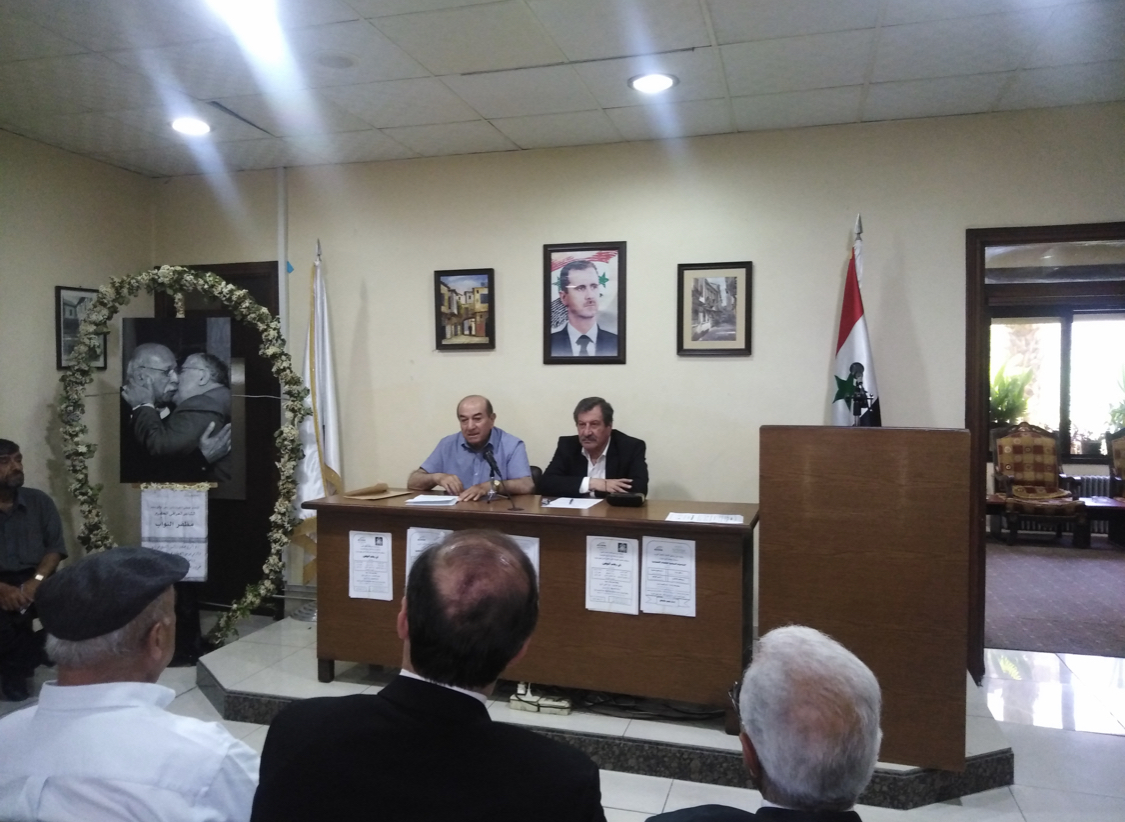
The Damascus Branch of the Arab Writers Union held a political symposium on Wednesday under the title “Political Repercussions of Economic Sanctions” with the participation of a number of political, economic and academic researchers.
The conversation was coordinated by Dr. Ibrahim Zaarour, head of the Damascus Branch of the Arab Writers Union, who confirmed that the sanctions have a direct impact on the life of the Syrian citizen, noting that these sanctions were never imposed in order to achieve justice or to support a people. It is the implementation of hostile American colonial agendas.
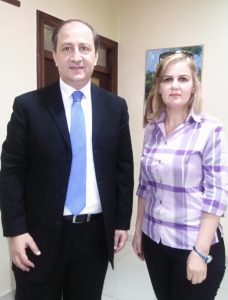 Zaarour added” we called for the necessity of confronting these sanctions with mechanisms that are applicable on the ground”.
In turn, researcher and university professor Dr. Ali Diab, a member of the Council of the Arab Writers Union, confirmed that these sanctions are characterized by comprehensiveness, and continuity that led to the decline of Syria’s rank in the human development at the global level.
Diab pointed out that these sanctions can be positively transformed economically and socially to historical opportunities because Syria has a geographical location and the diversified agricultural and industrial production .
Dr. Mustafa al-Kafri, an economic researcher and university professor, stressed that these sanctions affect ordinary citizens and can lead to starve and prevent them from accessing services and basic requirements of life.
He pointed out that these unilateral sanctions against the Syrian people are an integral part of the global terrorist war imposed on Syria since 2011, and it contributes to disrupted the production of goods and services and impeded economic activity, which led to a decline in food security and public services in all their forms, in parallel with the increase in poverty.
Dr . Anas Al Raheb a political researcher and former diplomat confirmed that the economic sanctions imposed by America are all outside the scope of international law and are characterized as stifling sanctions.
Experience has shown that economic sanctions do not usually affect the ruling regimes, but rather target citizens who are directly affected by them, which ultimately leads to a decline in the economy in its various forms, commercial, industrial, touristic, agricultural, and others. Like sanctions against Iran, Syria, North Korea, Cuba and Venezuela.
Thus, we conclude that the US sanctions on states were never imposed to achieve justice or to support peoples, but were rather imposed to achieve their political agendas in subjugating states.
Syriatimes asked Dr. Anas about the difficulties we face to overcome economic sanctions?
He answered “We are a self-sufficient country without the need for support from anyone, but Caesar’s Act has had a big effect on Syria, but we can bypass it.
America has retained its position in northern Syria to support the opponents of the Syrian state and those who stand in the way of the stability of the Syrian state.
These areas in which America is stationed are oil and agricultural areas, and therefore Syria can not be self-sufficient as it used to be because of the American theft of oil and wheat In this way, America affected the Syrian state more directly than Caesar’s Act.”
Dr. Anas added that the “issue of sanctions is complicated and it is not easy to get out of it completely, but we can find some solutions to get out gradually, especially when we have a conscious and legal administration that can understand the needs of people.
There must be intellectuals, politicians, and economists, and there must be joint studies and research center in Syria to present a strategic plan and alternative plans that provide logical and deliberate solutions to the crisis in Syria.”
Reported by Sanaa Hasan