
Value of Livestock Production in Syria Reaches 55%
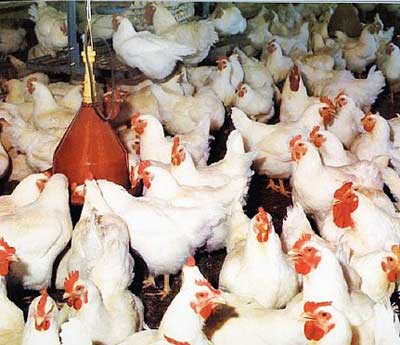

Technical Advisor of the Federation of Syrian Chambers of Agriculture, Eng. Abdul Rahman Qrunfleh, clarified that the contribution of livestock production of the total value of Syrian agricultural production, had witnessed a dramatic decline in the recent years, where the ratio fell from 38.2 in 2008 to 37.1 in 2009 and to about 35.7 in 2010 to settle at ratio of 34.1 in 2011.
“The actual value of animal production is bigger than the mentioned statistical figures and demonstrates the economic weight of this sector in the structure of national economy, where the ratio of contribution of the livestock production value in agricultural production reaches 55% if we take into account the value of the non- cash contributions for livestock in the agricultural production, where we can get thousands of tons of organic, various resources of energy as traction energy, transport, energy, and biogas energy, as well as the role of animals being played in combating harmful weed, reducing the costs of forest fires due to grazing grasses that grow under the trees which constitutes the most important factor of forest fires in the summer,” Qrunfleh added.
On the other hand, statistics ignore that the livestock production sector provides in creating job opportunities in the industrial and production beside the role of animals in supplying us with meat, milk and eggs .
“The Syrian livestock could constitute a sustainable resource of foreign exchange for the country and a key lever to the Syrian whereas the deterioration of the contribution ratio of the livestock production in recent years reflects a blurred vision in dealing with this wealth that provides animal products in the local markets and provides a part of them for export in addition to the supply of industrial sector with requirements of production,” eng. Qrunfleh confirmed.
Eng. Qrunfleh called to pay more attention to livestock breeders who work under harsh conditions.
He also stressed the need to reconsider priorities of the agricultural production and the development of livestock in the forefront, to focus on improving the use of agricultural residues in animal feed to reduce the standing competition between the human and animal, integrate animal husbandry in the agricultural cycle, develop the agricultural guidance concerning the livestock, as well as encouraging the investment in the livestock production remnants in generating biogas as a free source of energy, and developing the industries that rely on animal products such as eggs, milk, animal waste and organic fertilizer.
Sh. Kh.