
Damascene Sabils .. Masterpieces of Art and Architecture
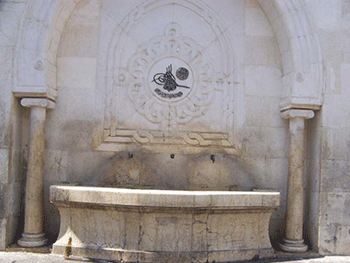

(Sabil is a free watering place distributed all over the city of old Damascus.)
The Sabil in the city of Damascus has formed a model that expresses the perfection of the architectural work and represents a unique work of art of the heritage attraction in the Damascene architecture. They are embellished with motifs and patterns, smooth and pillar shaped arches, writings of poetry and verses from the Koran.
Sabils are fed by Barada spring which meets the Fijeh spring to fork on the outskirts of the city to six rivers spread over neighborhoods and diverge thereafter to channels to reach schools and mosques, baths and houses. They have become on of the most important historical and cultural monuments which allowed residents and travelers over time to supply with water.
The interest of the dwellers of Damascus in drawing water to quench its population dates back to the Roman era. Some divisions of an old channel, belong to that era, are still existed until now and the area is called Qanwat (pl of Channel). It is one of rivers that irrigated Damascus.
In another phase, water tanks were set up on the side of the river to deliver water to the lanes and houses of Damascus. The roads also were provided with to meet the needs of the people in the city and passers- by specially from the neighboring towns and villages who come to fulfill their wishes and do their works.
Setting up the Sabil dates back to old different times including the Ayyubids and the Mamluks.
At the beginning of the 20th century, when it was established, al Fiejeh Water Foundation set up new Sabils in the quarters of the city, roads, and entrances of the streets.
The Sabil, being a kind of charitable work, has exercised a social function through ensuring drinking water to the population and the visitors of Damascus.
The Sabils has gained an aesthetic value as a result of the evolution of the art of building.
Setting up Sabils, on one hand, reflects the abundance of water in Damascus and reflects the kind- hearted of its sons and their thinking to quench the passers-by with the aim of reward and recompense, on the other.
The most important Sabils in Damascus are: Al Mussili Llane Sabil, the Black Jurun Mosque Sabil, Fathi Bath Sabil, Al Bimarstan Al Nouri Sabil, Abu Esh Shamat
Za wyeih (place for worship) Sabil and Al Sheikh Hassan graveyard Sabil.
sh/Kh