
Tourists Warm Up to Syria
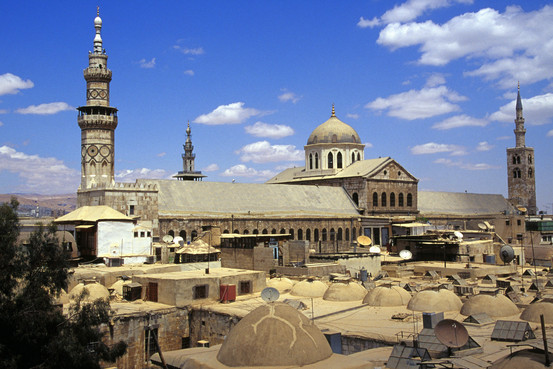

But tourists, many of them European, have been warming to Syria for some time. Part of the appeal has been the charm and relative ease of getting around in a place that hasn’t turned into the type of mass tourism destination that other Arab countries like Morocco or Egypt have become. Syria offers inexpensive and reliable public transportation and its tourist attractions are not thronged with crowds.
The Umayyad Mosque in Damascus.
Stephen Wagner, a 27-year-old paramedic student from Leipzig, Germany, and a fan of Middle Eastern culture, recently spent nearly three weeks traveling through Syria. Friends told him it was an easier place for foreigners to visit than other Arab countries — with no tourist traps and fewer hassles from street vendors. “I was in Morocco in the spring, but I found it too aggressive toward tourists, with people always trying to sell things,” Mr. Wagner says. “I heard Syria was completely different. And it’s true.”
Spaniard Luis Olivares, who also made a recent trip to the country, adds: “I like the hospitality and the fact that it’s easy to move around here.”
Drawn by a handful of new, boutique hotels in Damascus, an Old City that officials are slowly restoring, and an overseas-marketing campaign, the number of foreign visitors has risen by 50% this year compared with last year, according to the Syrian ministry of tourism.
At just over seven million visitors in 2007, the boost is helping Syria catch up with some of the region’s more established tourist destinations, like Egypt, which drew 10.6 million visitors last year, according to the World Travel & Tourism Council, a London-based trade group.
The growth comes despite occasional incidents of violence that take place in the city and elsewhere in the region. Hezbollah fighters in next-door Lebanon took to the streets of Beirut in the spring, but then quickly withdrew. After a power-sharing deal there, Beirut’s legendary parties, nightlife and beach clubs are back in full swing. Relative to the rest of the Middle East, the past several months have been peaceful in Syria’s tourist areas.