
Sabbagh: Ending occupation, fighting terrorism, lifting coercive measures imposed on Syria essential to address migration challenges
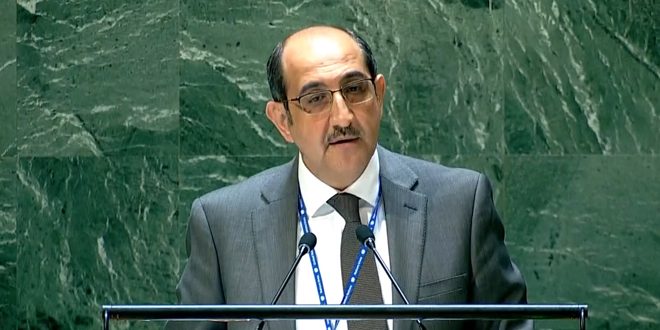
Syria believes that addressing the causes of migration requires creating suitable circumstances that consolidate citizens’ steadfastness and enable them to stay in their homelands, instead of letting them face difficult circumstances that lead them to migrate or seek refuge in other countries, Syria’s Permanent Representative to the United Nations Bassam Sabbagh said in a statement on Friday during the 1st International Migration Review Forum (IMRF) held at the UN headquarters.
The Middle East region has suffered for decades from western hegemony policies, military aggressions and Israeli occupation that led to different waves of migration or asylum, said Sabbagh.
“Over the past ten years, Syria has faced different forms of terrorism supported by the governments of some UN member states and that aimed at undermining its security and stability and forcing the country to give up its national options. Syria also faced unilateral illegal coercive measures that have had catastrophic impacts on the daily life of all the Syrians and that have deprived them of securing their most basic needs. All these massive difficulties have led a large number of Syrians to leave their homeland fleeing terrorism and looking for a better life in other countries,” he added.
The Syrian diplomat clarified that bringing those Syrians back to their homeland can’t be achieved through promoting the so-called “safe zones” which violate Syria’s territorial integrity and threaten its security and stability as they are based on ethnic cleansing and demographic change. He stressed that eliminating the causes of migration necessitates creating suitable circumstances that consolidate citizens’ steadfastness and helps them stay in their homelands.
He pointed out that despite all the challenges it has been facing, the Syrian government has exerted massive efforts to improve the humanitarian situation, to put the country on the path of recovery and to achieve development goals.
The government has spared no effort to secure the basic needs of citizens and restore basic services in different sectors, he explained, noting the several amnesty decrees and administrative and legislative procedures that have been issued to help achieve national reconciliation and restore security and stability across the country.
Sabbagh also stressed that Syria has encouraged international investment in early recovery programs as an important step to address the elements that push some Syrians to leave their homeland and it has been doing its utmost to create suitable environment for the safe and voluntary return of the refugees and the displaced to their original areas of residence.
He called for respecting the international law and international conventions and urged international cooperation among all UN member states away from the policies of isolation and hostility. He also called for ending occupation, fighting terrorism and preventing the terrorist organizations and organized crime groups from obtaining funding through human trafficking and for lifting the illegal coercive measures imposed on Syria as very essential steps to solve the problems resulted from migration and eliminate the root causes of this phenomenon.
Sabbagh also reiterated the need to confront the hatred, violence and racist practices facing the migrants and refugees in some countries, including the Syrian refugees and migrants, calling for adopting an international behavior blog to put an end to these practices.
Hamda Mustafa