
Ramadan in Syrian
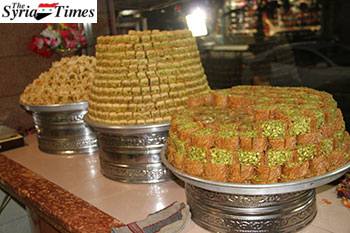
For Syrians, Ramadan is home time, a time where mothers and grandmothers care for family and as ever that care is displayed through food. Around a big table of meticulously made meals the whole family sits, all at the same time, to share and enjoy delicious food prepared with utmost care.
While, not so long ago, a family sitting together to savor a meal used to be taken for granted; anyone living in today’s world knows how such simple joys have become quite challenging these days and might need taking extra measures, or even require pre-scheduling to happen! Today’s hectic lifestyle demands have left families striving for each other’s company, therefore Ramadan offers a welcomed break from that challenge allowing families to gather again, catch up and share meals together.
‘Silat Al Arham’ (Blood Ties) meaning gathering and connecting with the kinfolk, is one of the Islamic virtues that becomes fundamental in the Holy month. Therefore, families ensure meeting and connecting.
 Maternal love is in most cases displayed through nurturing by food. It is well known how our mothers always want to feed us, always demanding us to gather and tempting us with spreads of deliciousness. Especially during Ramadan, knowing that everyone is hungry and would appreciate good meals, they go out of their way and artistically create challenging and time consuming delicacies for all their children to enjoy.
“During Ramadan we spend more time in the kitchen, and we prepare many dishes for Iftar (fasting breaking). It is how we express love to our family.” One Syrian mother declared. Although our mothers make it all seem effortless, the production of such varieties is no easy task and in order to produce delicious daily meals, some preparation ought to take place in advance.
In Ramadan That mission is not only taken by our mothers, but even our grandmothers. the sight of a mother and grandmother standing together in the kitchen, cooking together for their children, is a real attraction in Ramadan. I have always enjoyed watching mine, and now more than ever appreciate the sentiment and the effort of such generosity of spirit.
When I asked my grandmother about the change of eating and cooking habits during Ramadan from the rest of the year, she accord that Ramadan is a month to eat at home and particularly homemade traditional cuisine, firmly stating that Ramadan is not the month for consuming fast food. Sharing most Syrians opinion about Ramadan’s eating habits.
 I was really excited when describing Ramadan as being the month of home, where mothers and grandmothers symbolize care, passing a large part of the day cooking to ensure family gathering and enjoying delightful meals. That is a short and sweet description of Ramadan’s spirit in my mind, giving that month a unique flavor. Ramadan rituals in Syria lie in the ability to gather and bring back the simple joys of life.
Food is at the centre of home, where all the family shares joy. The preparation of a variety of meals for Iftar-time ( breaking fasting at the sunset) is a reflection and a celebration of both: bringing together the family and breaking the fast.
“In Syria, Ramadan is so special for us that the preparations generally start in Chaaban”(the 8th lunar month in Hijri calendar preceding Ramadan), when housewives start stocking their pantries with principal ingredients such as: sesame seeds, almonds, peanuts, chickpeas, lentils, honey… etc.
In a refined cuisine such as the Syrian cuisine, all recipes are irresistible. However there are specific dishes synonymous with Ramadan and must be included on Ramadan menu. We are known by three Syrian Ramadani recipes: First, Sellou (a special mixture of nuts, sesame seeds, roasted flour, butter and honey) that we consume at Iftar-time. Second, we make kilos and kilos of Knafa (a famous Syrian sweet) served with the equally popular soup Hareera to balance the sweet and sour taste. Third the Briouates Louz (special filo samosa, stuffed with almonds and soaked in honey flavored with orange blossom water).
In my country, Ramadan has special culinary rituals: Ramadan for Syrians is eating at home. We prefer eating traditional foods, no way that we consume fast foods! We spend more time in the kitchen preparing varieties of dishes for Iftar. Generally, we start cooking at 1.00 pm preparing Hareera, savory samosas, Batboot stuffed bread, marqet dja’j( chicken sauce) chicken tajine , almond mini pies baghreer pancakes, and salads.
H.M