
Al-Juweikhat…Awesome nature and stunning views
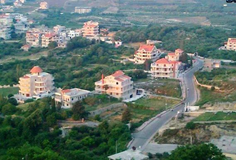
 It is adjoined to the west by Oyoun al-Wadi and Mashta al-Helou, to the north by Treys, to the east by al-Battar, and to the south by Bidar Rafi’. It rises as high as 850 m from the sea level. Its climate is pleasant in the summer and is cold and snowy in winter. It has gained its fame from the beauty of its nature and hospitality of its people.
The origin of the name Al-Juweikhat has not been fully specified. Some say that it is of Syriac origin, where the name is composed of two words: “Juw,” which means climate, and “eikhat,” which means foggy and rainy, that’s exactly the same as its climate. As for the language, the word “Jokha” means pit, it was reduced to “Juwekha,” meaning the crater that lies between several hills, and this is the geographical position of Juweikhat, as it is surrounded by four small hills.
 Al-Juweikhat enjoys a beautiful and varied nature of green mountains and a privileged location in the middle of many wonderful areas and summer resorts. It is distinguished by gentle cool breezes during the hottest summer days and with a special dawn that is accompanied by the “Al-Ghattita,” which is the formed mist that touches the hills lovingly.
One of the most important landmarks of the village is two churches. The old church, named after Saint Giurgius, was built in 1910.
The blue stones of this church are said to have been brought from the area of Dahr al-Qusayr, where the men lined on a distance of 2 km from the church to the place of the stones, where they handled the stones to each other and built the church at the cost of villagers, expatriates and the government. A stone on the west doorstep is said to have been brought from an old church in the nearby village of Treys. The new church was named after St. John was built in 1966, and the two churches are now a religious and tourist destination.
 The village is one of the most important Syrian tourist villages, as it is intended by Arab and foreign tourists from all over the world to enjoy its wonderful nature and lovely atmosphere, as well as the quiet restaurants, rest houses and cafes there.
It gained its fame from its many springs, the most important of which are: Ain Al-Safsafa – Ain El-Tineh – Ain Al-Sindian – Ain Al-Labni – Ain Al-Jamasa – Ain Bu Iskandar – Ain Al-Ballan – Aziza Spring – Al-Saridah Spring and Al-Basateen River. It is considered one of the first villages to produce apples and peaches.

Amal Farhat