
Syrian critical song endeavors to regain its position
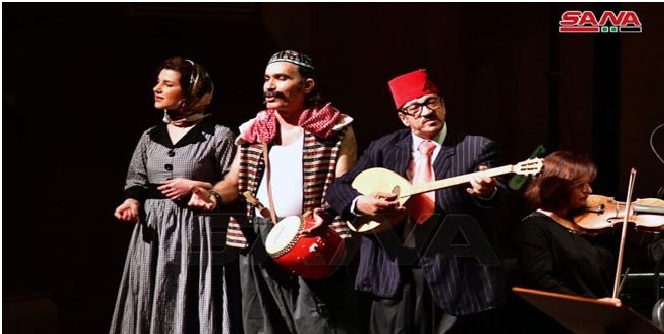
From the alleys of old Damascus and the paradoxes of the situations it passed through, the art of lyrical comedy came in the twenties of the last century to monitor life, challenging the difficult conditions and the harshness of the occupation at the time and drawing a smile to the listeners.
In an interview with SANA, the researcher and music historian Ahmed Boubus pointed out that the critical song is a branch of the Arabic song that criticizes some wrong social attitudes and behaviors through which great artists emerged. He referred to the experience of the pioneer of critical singing in Syria, the popular monologist Salama Al-Agwany, who was known to the public in 1927.
Al-Aghwani formed a great obsession and concern for the French colonialism at the time with his monologues due to the challenges it carried and due to stimulating people to defy it. In one of his monologues he referred to the economic crises that the Syrian people were suffering from at that time as a result of the French occupation.
Boubus noted that Al-Aghwani’s songs were characterized with simple words that ironically monitor the reality of the situation through an expressive lyrical performance with perfect sound and movement.
Researcher Boubus finds that the critical song took a very important step by the artist Rafiq Sbaie, who was most affected by Al-Aghwani’s march. The actor Sbaie became one of the most prominent features of the critical song in Syria, and transformed the critical song from a monologue into a popular song and he deserved the title of People’s Artist.
The music researcher referred to the appearance of some Syrian actors who had experiences in this field, namely Duraid Lahham, Abdel Latif Fathi, Ahmed Ayoub, Anwar Al-Baba, Fahd Kaikati, , in addition to the artist Yasser Al-Azma, who had a present imprint in reviving the Syrian critic song through the episodes of his series “Maraya”.
“The critical song” is a point of view or an opinion, in which realist words are integrated with music, criticizing the negative aspects of society, such as the monopoly of merchants, unemployment, and exaggerated marriage expenses, Duraid Lahham said.
The monologist Riad Maraachli confirms that the art of monologue still occupies a large area in the Syrian art scene.
In his last concert, which was hosted by Dar Al-Assad for Culture and Arts, Maraachli performed, accompanied by an orchestra, songs that have passed for a long time, but their words still emulate the present time. This means that the critical song is still preserving its glamour. Through his participation, Maraachli seeks to develop the art of monologue and present it to people in a way that is understandable and beautiful and that reflects the civilization of our country.
Inas Abdulkareem