
How Syria brought the world Music Yesterday and Tomorrow
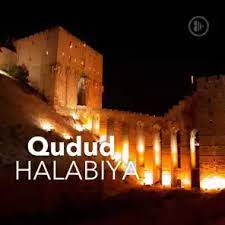
Syria’s musical traditions show histories and cultures that transcend contemporary politics and war. This is a country that gave the world a song. In Syria, music runs deeper into the fabric of the place than anywhere else in the world.
In a report on BBC they stated “Syria had developed rich musical traditions over thousands of years, long before the modern state was formed in 1946. The diverse religions, sects and ethnicities that inhabited and traveled across the country over the millennia – Muslims, Christians, Jews, Arabs, Assyrians, Armenians and Kurds, to name but a few – all contributed to this eclectic musical heritage.”
In the 1950s, archeologists found thirty 3,400-year-old clay tablets in a small cubicle – likely a library – in the ancient port city of Ugarit on Syria’s Mediterranean coast. They were mostly broken into tiny fragments, but one, which came to be known as H6, remained in larger pieces. Inscribed on it were lyrics, and underneath them is what researchers believe is the earliest example of musical notation anywhere in the world.
Academics have spent years literally piecing together the tablets, trying to work out what was written on them, what it meant and how the musical notation might sound were it to be played again. The text is in Babylonian cuneiform script, a system of writing that spread throughout the region several millennia ago. The problem with this tablet is that – we could read the script because it was written in Babylonian cuneiform, and we knew the value of the signs – but we didn’t have any idea what it meant.
 The earliest musical composition tells us about the people who lived at that time. They had catalogues of songs for occasions of all sorts and moods, not just hymns for religious events. Whereas the tablet known as H6 details a more sober story about a young girl who cannot have any children; she thinks that the reason is because she misbehaved in some way, which is not mentioned. She goes at night to pray to the goddess Nigal, who was the goddess of the moon. She brings a little pot of tin with sesame seeds or sesame oil in it, which she offers to the goddess.
But Syria did not produce only the earliest melody. Over time, a rich array of musical instruments on which to play them also formed across the region, such as the lyre, a stringed musical instrument with a yoke and a crossbar, and lutes, which evolved into the modern Arabian oud, a teardrop-shaped plucked string instrument that produces one of the most evocative sounds in the region.
In 2017, Syrian authorities launched a bid to have Aleppo, Syria’s second city, added to Unesco’s Creative Cities Network as a ‘City of Music’ to commemorate its heritage. During the 17th Century, Aleppo was renowned for its muwashshah, a form of music combined with lyrics from Andalusian poetry, classical Arabic poetry, or, later on, Syrian or Egyptian conversational Arabic. Muwashshah are performed by a band playing the oud and qanun (a horizontal board with strings plucked to produce a haunting sound like trickling water), as well as the kamanja (a violin-like instrument), a darabukkah (drum), and a daf (tambourine). The form thrived in the city, where it was embraced by both Muslim and Christian populations.
Few days ago, on the 15th of December 2021, Syria hailed UNESCO’s recognition of Qudud Halabiya music as intangible cultural heritage.The listing is a recognition of Syria’s cultural legacy, the ministry said in a statement. Qudud Halabiya, which literally means music from Aleppo, is a form of traditional music with a fixed melody. Singers of Qudud Halabiya often improvise lyrics according to what is happening around them.
Qudud Halabiya are traditional Syrian songs combining lyrics in Classical Arabic based on the poetry of Al-Andalus—particularly that in muwashshah form—with old religious melodies collected mainly by Aleppine musicians. Their themes are most often love, longing and spirituality. UNESCO hailed the musical genre as “a vital part of Aleppan culture” and “a source of resilience, particularly during war.”
Syrian musicians celebrated on Friday the inscription of Qudud Halabiya on the World Heritage List of UNESCO by holding a concert under the motto “Our Qudud…to the Human Heritage.” The event was performed by the Syrian National Band for Arabic Music, led by Maestro Adnan Fathallah on the Damascus opera stage. Renowned singers and younger ones from Syrian conservatories participated in the festivity organized by the Ministry of Culture .
Syrian music heritage has come a long way since the melody found on the clay tablets at Ugarit. Today, folkloric bands and solo singers are reinventing the definition of Syrian music, bringing it to new audiences.
“Where words fail, music speaks.” Yes, music has succeeded in uniting people. It is an incredible force, something that people who differ on everything and anything else can have in common. Something we really need to reconnect Syria with the world.
Lama Alhassanieh