
Al-Sheikh Mountain reveals Zionist ambitions and thefts of wealth of occupied Syrian Golan
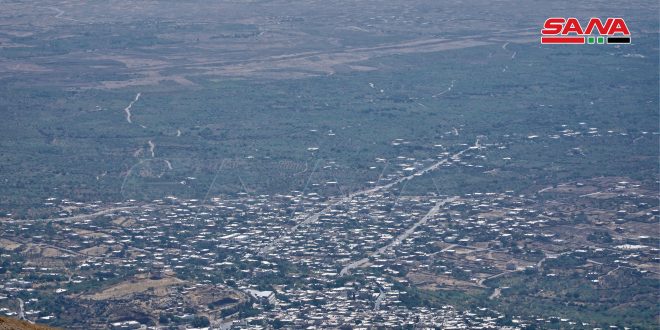
The ambitions of the Zionist entity in the occupied Syrian Golan were planned years before its occupation with the aim of exploiting its water, agricultural and even tourism resources. Israel began to loot Golan resources since its occupation after the June aggression of 1967, ignoring all international laws and norms.
The policy of expansion and aggression pursued by the occupation entity affected the human, vital and natural components of the Syrian Golan. Al-Sheikh Mountain, which enjoys natural, climatic and historical character, is one of these areas that were subjected to the Israeli occupation, which used all forms of threats and intimidation to displace its people and exploit it for tourism in summer and winter amid malicious attempts to obliterate its historical features .
The occupation authorities recruit people for the mountain, which is visited by hundreds of thousands of tourists, during the summer with the intent of distorting the geography and history of the place, fabricating false fictitious stories and delivering political messages that the occupation is trying to consolidate in the memory of everyone who visits the place.
Al-Sheikh Mountain constitutes the largest, most important and highest section of the eastern Lebanon mountain range, which extends between Syria and Lebanon. It is bordered on the east and south by the Wadi al-Ajam region, Iqlim al-Balan and the villages of the western countryside of Damascus and the occupied Syrian Golan, and from the north and west by the southern part of the Bekaa Valley and Wadi al-Taym in Lebanon.
The mountain has four peaks, the highest of which reaches a height of 2,814 meters. It is called Sharat al-Haramoun or Qasr Shabib, which belongs to the Quneitra Governorate. Al-Sheikh Mountain is considered the most important water resource in addition to being a groundwater reservoir, one of the largest ones in the region historically.
The mountain was one of the most important centers of worship for the Canaanites and the Phoenicians who named it after one of their gods, “Baal Hermon.” The temples in the Hermon were attached great attention from the Romans, who renovated them and crowned the highest walls with crowns similar to the temple of “Bacchus” and the temple of “Jupiter” in Baalbek, where the archaeological monuments are still witness to this.
Al-Sheikh Mountain remains the greatest symbol for the Syrians, as they fought the glorious October war on its hills, raising the Syrian Arab flag on its peaks in a battle that the Israeli occupier cannot forget.
Inas Abdulkareem