
Plastic artist Habib Najjar’s artworks depict Syrian heritage.
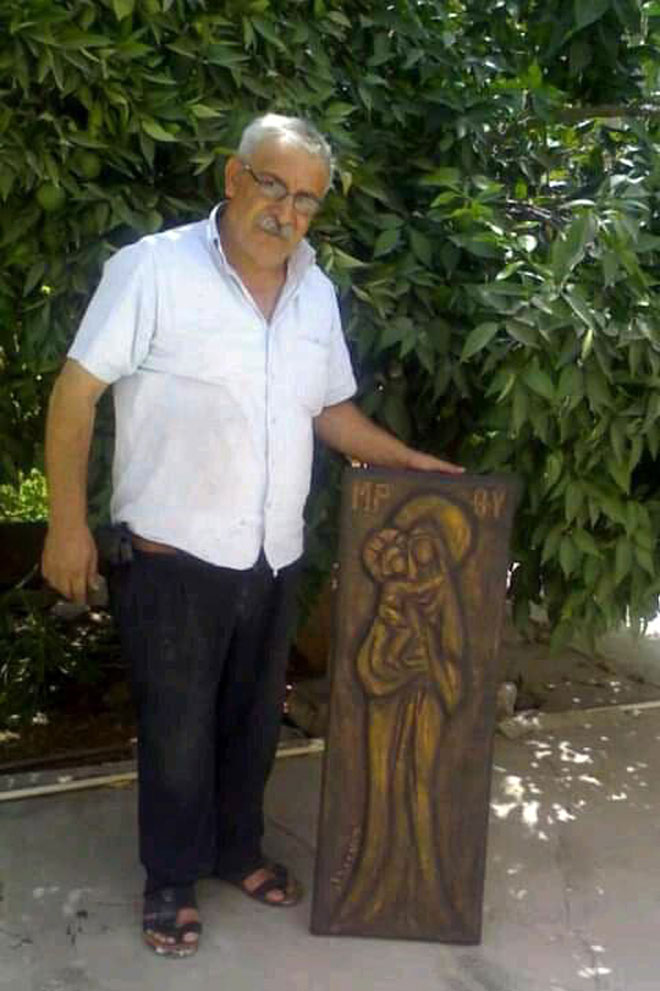
Najjar’s art depends on realism, research and experiment in the world of painting and its technique to present the aspects of daily life in artworks through which he expresses the concerns of human beings in search of tranquility and familiarity .
The plastic artist , who had a passion for art since his childhood and had exhibitions in the preparatory and high school stages, told SANA that the heritage and ancient life in his city contributed to the formation of his talent , expressing his admiration for its old neighborhoods which he revived through his artworks and they were a source of his works.
He described the painting, with all its natural and human elements as a living being . Sometimes the town appears as a body feeding from an artery in the ground, a deep-rooted tree, or as a warm embrace of a mother tending to her children.
Najjar believes that the visual culture that he acquired in his childhood through simple rural life had a great impact on the formation of his paintings , stressing that the land, water and trees are always present in his artworks as well as the traditional clothes , which expresses the artist’s main goal to create harmony between man and nature .
He mentioned that the most important station in his artistic experience is the painting and embroidering of 45 icons in the Byzantine style, which were distributed over the town’s churches and outside them.
Artist Najjar noted that he uses many materials in his sculptures that simulate human feelings, nature and women and present them with a special aesthetic drawing. He inspired the ideas of his artworks from his local environment as he carved on stone, marble and wood, indicating that his preoccupation for several years in drawing the Byzantine icon had a symbolic effect in his sculptural works.
It is noteworthy that the artist Habib Najjar was born in Mahrada in the countryside of Hama in 1961. He participated in a number of exhibitions held in several governorates.
Rawaa Ghanam