
Sabbagh: Syria continues to improve the humanitarian situation of its citizens
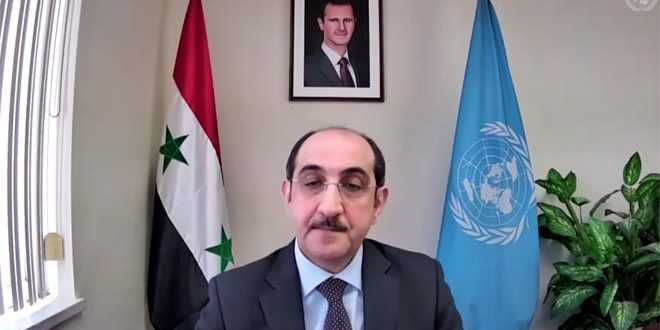
Sabbagh pointed out during a Security Council session via video that, Syria has continued its constructive cooperation with United Nations agencies and humanitarian partners to improve the humanitarian situation and deliver humanitarian aid to needy people.
Syria, two days ago, addressed two messages to UN secretary general and President of Security council regarding the context of the 72nd report of the UN Secretary General about the humanitarian file, reiterating rejection of the mechanism of delivering aid through borders as this mechanism violates Syria’s sovereignty, he added.
Sabbagh said that, one of the main challenges facing humanitarian access is the obstructive role of the Turkish occupation forces and the terrorist organizations affiliated to them who have prevented a joint convoy from arriving in the city of Al-Atarib, which Syria had been granted approval for by the United Nations since last April.
He also went on to say, “the Turkish regime continues using drinking water as a weapon against civilians in Al-Hasakah where it cuts off drinking water, for the 23rd time, coming from Alouk station to the city and it’s surroundings for sixteen days, causing more than a million Syrian citizens to suffer from thirst and deprivation of water. The Security Council however remains silent about these practices and does not assume its responsibilities in trying to find a solution to this problem”.
Sabbagh added that, for more than ten years, Western countries have exhausted the Security Council by holding one meeting after another on Syria, not with the aim of addressing the important issues related to combating terrorism on its territories, ending the illegal foreign military presence there, lifting the unilateral coercive measures imposed on its people, and building what has been destroyed by terrorism, but rather to launch hostile campaigns, provocative statements and unfounded accusations.
Sabbagh said that, Syria regrets the participation of the United Nations in chairing an event dedicated to the politicization of humanitarian work and links it to terms that are totally inconsistent with its principles.
Sabbagh reiterated Syria’s commitment to a political process with Syrian ownership and leadership by the UN represented by its special envoy, Geir Pedersen, in light of full respect for Syria’s sovereignty, independence, unity and territorial integrity.
He stressed that, the success of the work of the constitution discussion committee requires respecting its rules of procedures that have been agreed upon, and rejecting any foreign interference in its work.
Sabbagh said that, millions of Syrians, inside and outside the country, will go to the polls next month to cast their votes in the upcoming presidential elections.
He affirmed that those elections are a sovereign constitutional entitlement which is consistent with the state’s task to ensure that its institutions fulfill their constitutional duties and move forwards towards completing other duties, including liberating the land from the remaining terrorist organizations, putting an end the illegitimate foreign military presence, restoring security and stability, and rehabilitating what has been destroyed by terrorism.
Raghda Sawas