
Aleppo will end the war on Syria
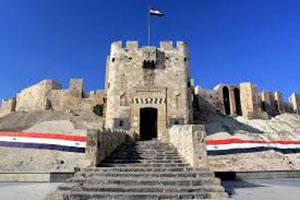
The war on Syria went from a seeming quagmire to a conflict that may reach a dramatic climax with the coming battle for Aleppo, a city of nearly three million people that was once the commercial center of the nation
The Syrian Army finished off final terrorist resistance in the city of Qusayr last week fighting alongside the Lebanese group Hezbollah. As a result, the terrorists supply line from Lebanon is shut down and the major road from Damascus to Aleppo via Qusayr is open to the Syrian Army. The road will serve the supply line for an attack to end terrorist occupation of half of that city.
A victory by the Syrian Army in Operation Northern Storm, named after Aleppo’s effort, will leave the terrorists with very little in the way of major influence or meaningful territory. From the start, these terrorists’ strategy focused on urban warfare. These groups would have little chance of survival in a conventional battle with the Syrian Army.
Damascus is under government control. With a victory in Aleppo, the Syrian state would reclaim control of its two key population centers. The United States – Russia sponsored peace conference scheduled for July would be an afterthought.
Two of the key supporters of the terrorists in Syria are not in a position to provide much help to them, in their attempt to hold their position in Aleppo.
Turkey
Turkish Prime Minister Recep Erdogan is preoccupied with a raging protest movement focused on the PM and his policies. The movement began and is centered in Istanbul, the nation’s largest city and world trade gateway. Turkey took the lead in public opposition to the Syrian government in 2011. Its southern border near Aleppo, particularly the city of Adana, served as the conduit for supplies and fighters from Arab Gulf oil states.
Siding with militants was never popular in Turkey. It is very unpopular now. As certain as he may seem about everything he says, Erdogan would risk a great deal through robust assistance to the terrorists.
Britain
British Prime Minister David Cameron has a deep commitment to Syrian opposition groups. Cameron has steadfastly advocated for a lifting of European Union ban on the supply of weapons to the terrorists. The PM is limited by defections from his own party and a split cabinet, with one faction opposed to the supply of lethal assistance. Oddly, Cameron maintains that it will take 18 months for the weapons supplies to spread among the terrorists.
The battle for Aleppo will be decided long before the suggested 18 months is up. The outcome could end the terrorists as a viable force that justifies additional outside aid.
The Battle for Aleppo – July 2012 through May 2013
The terrorists first attacked Aleppo in earnest in July 2012. Prior to that, they took control of large sections of the countryside around the city. The attack originated from a cluster of towns to the north of the city near the Turkish border or with terrorists embedded in Aleppo. Foreign fighter were likely trained and supplied in the Turkish city of Adana, just across Syrian-Turkish border. News of the Turkish base first surfaced in July 2012.
Whichever version of the attack is correct, one thing is certain. There was no civil insurrection in Aleppo by citizens of that city. Nor did the attack come at the request by Aleppo’s residents.
Currently, the city is divided into three sectors, controlled by the extremists, the Syrian army, and Syrian Kurds. About a year or more terrorist’s control of the city of Qusayr and the Homs province cut off regular supplies and troop movements to support efforts in Aleppo, but the fall of Qusayr changed all that. The Syrian’s can now supply their army in Aleppo, knowing that the Lebanese militant supply pipeline is closed.
Istanbul and London
Turks are protesting in 80 cities across the country. The eruption of civil discontent started on May 31 when police assaulted protesters in Istanbul’s Taksim Square. What started as a protest of plans to change a major square in Istanbul has grown to a nationwide movement sustained since May 31. The general themes have broadened to include the opposition to the autocratic rule of Prime Minister Erdogan, creeping religious rules restricting the public, and Turkey’s involvement to the conflict in Syria.
Erdogan’s initial reaction to the protests was disdain calling the protestors “bums.” When he left the country for a visit to North Africa, his Deputy Prime Minister apologized for the violent police reaction in the early protests and met with demonstrators. When Erdogan returned, he was expected to calm things. Instead, he held rival rallies of his supporters telling crowds that the protestors were “drinking beer in mosques and insulting women wearing headscarves.” These allegations risked pitting his party supporters against protestors in violent conflict.
There are three constituencies that openly oppose Erdogan: supporters of secular ruling model in Turkey, Alevi population, and Kurds. All together, these three groups represent close to half of the total population.
A fourth, more dangerous opponent is Fethullah Gulen, leader of the powerful Hizmet movement, a moderate Muslim “state within a state.” Gulen opposes Erdogan’s commitment to violence in Syria and the Prime Minister’s overbearing style of rule. A clear abandonment of Erdogan would be devastating.
Erdogan alienated the military through the prosecution of several hundred military leaders for alleged plans for false flag terror operations against fellow Turks. Yet he relies on the military to further his program by restraining the type of military coups that have toppled previous Turkish leaders.
Why would Erdogan risk his rule to intervene directly in Syria, particularly a battle about to be fought that could determine the outcome of the terrorist’s assault on Syria’s government? And, if he did, would the military cooperate? I don’t think so.
There is no civil unrest beleaguering British Prime Minister David Cameron. However, his insistence on providing weapons to the terrorists in Syria is costing him dearly. Half of his cabinet came out in opposition to any military aid (although there has been covert aid for some time). Eighty-one Conservative Members of Parliament wrote an open letter to Cameron opposing aid through weapons. The members demanded a floor debate and vote on any aid package.
Cameron’s main support on the Syrian project comes from his neoconservative cabinet members and their allies in the British version of the Federalist Society, known as the Henry Jackson Society.
The PM is isolated politically in his adamant support for aiding the terrorists in Syria. His ability to deliver is viewed as extremely limited.
Even if Erdogan acts without regard to his political future and Cameron has none, neither leaders will be able to provide the time-critical delivery of what the terrorists need to survive the furious battle by the Syrian Army set to begin in the next hours or days.
Since the conflict began, in victory and defeat, the various factions of the Syrian opposition groups, and their allies (the terrorists) have complained bitterly about an absence of weapons and ammunition. If Operation Northern Storm succeeds, this may be the last request for weapons that the terrorists make; or, at least the last request that anyone bothers to cover.
Source: themoneyparty.org
B.N