
The Seven Gates of Damascus
Syria runs through me the way blood runs though my veins. Damascus the capital of this marvelous country has alone more than 125 monuments from different periods of its history, which, indeed, makes me proud to be Syrian.
Unlike history of most western and gulf countries, a 10000-page book can not cover the great history of Syria which enjoys an important geographical position at the crossroads of the orient and the occident.
In this article, I will talk briefly about one chapter entitled “the seven gates of Damascus” which are leading to the city which is the cradle of civilizations.
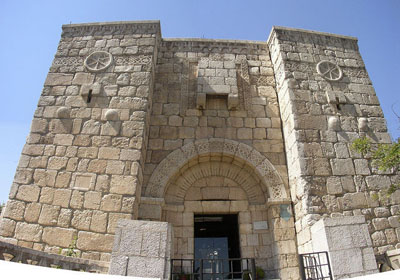
Damascus, founded in the 3rd millennium BC, was surrounded by wall built in the Roman period with huge rounded rocks and stones, with seven gates and a paved network of roads that comes out of these gates in different ways.
In the north, you can see “Bab Toma” (Thomas Gate) whose name is related to one of Roma’s known great figures called Thomas. It’s also mentioned that Caliph Amr Ibn Alas entered Damascus from this gate.
Next to “Bab Toma” to the west another gate called “Bab alsalam” (Peace Gate) , which was rebuilt in the time of Nour al Din Mahmod where he built a minaret over it.
The third gate is “Bab al-Faradis” which is named that way because in the Roman era it was surrounded by many groves and water and it was rebuilt in the time of King Al Saleh Ismail in 1241. It’s also called “Bab Al-Amara” as it is located in Al-Amara ally, surrounded by shops and houses.
Moving towards the south side, near al-Baytara square, a fourth gate named “Bab Kissan” after Kissan the guardian of the Caliph Mo’awia. This gate was the entrance of a church built in the Byzantine era.
The fifth gate, “Bab al-Saghir” or the “Small Gate”, is the smallest of all gates and it is now located near to Shaghor.
However, in the east of the city and according to the location, the sixth gate is named “Bab Sharki”. This gate is formed of three vents in the form of arches, the biggest one is in the middle and behind it there’s a straight street, while the other two vents behind them are carried by columns. It’s mentioned that Khaled ebn al waleed entered the city through this gate.
In the west side of the city, there is the seventh gate named “Bab al-Jabiya” which faces the eastern one and has the same structure. It ‘s name is related to Al Jabieh village because they used to pass out of it when going to that village. Obayda Ben Al Jarah entered Damascus through this gate.
These are the main gates of Damascus which are widely known as architectural characteristics of the oldest continuously inhabited city in the world. They have witnessed a lot of events and every stone of them can tell us the story of this city throughout ages.
Basma Qaddour