
250 tons of honey production is estimated in Syrian, Hama city for the current season
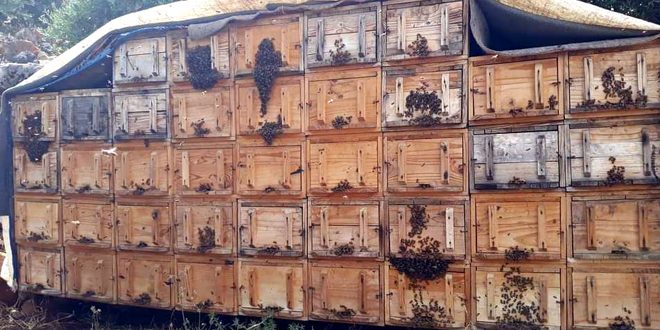
The head of the bee division in Hama agriculture, Eng. Moayad Jarjanazi, estimated the province’s production of honey during the current year is at about 250 tons, indicating that honey harvesting operations have begun, and the beehives in the province are in good health and free from diseases and pests.
Jarjanazi pointed out, in a statement to SANA News Agency reporter, that fluctuations in weather and climatic conditions affected the productivity of the beehive, which declined at an average rate of 5 kg of honey per hive, in addition to the decline in pasture areas of anise and black seed.
He also explained that the Directorate of Agriculture provides the necessary services to encourage beekeeping, and expand its scope by providing a laboratory for analyzing diseases and pests that affect bees and knowing how to prevent them, providing the necessary consultations to breeders and holding seminars and scientific lectures on the latest methods used in beekeeping.
Jarjanazi besides called on breeders to put labels on honey packages specifying their specifications and origin, in addition to using glass honey containers instead of plastic ones, indicating that the number of beekeepers in the governorate reached 2,320 beekeepers, and the total number of hives reached 50,000 hives.
For their part, a number of beekeepers in Hama, including Hussam Koussa and Thaer Muhammad, called for finding a specialized agency in the field of marketing the product and adjusting its specifications, and establishing a special association for beekeepers affiliated with the Farmers Union, in addition to holding specialized festivals to promote Hamawi (made in the city of Hama) honey and apiary products of wax and pollen.
A number of breeders explained that fluctuations in climatic conditions constitute one of the most important difficulties facing this profession, and the process of moving hives from one place to another exhausts the breeder and increases production costs, calling for providing natural pastures and reserves for beekeeping and cultivation of aromatic plants.
Leen Al-Salman